4th April marks the birthday of Rêber Apo – Abdullah Öcalan – who has now been held in solitary confinement on the prison island of Imralî for 27 years. Over the past year and a half, significant steps towards change have been taken, enabling Rêber Apo to break through the walls of solitary confinement with a call for peace and a democratic society, thereby toppling further dominoes on the path to freedom. The people of Rojava, and indeed we too, regard Öcalan’s birth as the birth of a free life. Through his character and his stance over the past 27 years, Rêber Apo demonstrates that freedom is a boundless concept capable of overcoming physical confinement and isolation under the most appalling conditions – ranging from psychological terror to deliberate mental torture. Thus, we women also regard this day of the birth of free life as our own birthday. For the efforts made by Abdullah Öcalan are directed with great passion towards all mothers, young women and everyone else who feels a responsibility to create, shape and form life. For even in his childhood, he was moved by the character of women and their contradictory role in today commons society. A role that women would naturally fulfill concerns the cohesion of society, orientation, consciousness and aesthetics. Yet now women have been driven into a corner that has torn them away from every social and ecological task. They are no longer expected to play this role. Yet, as in so many other moments, we remember on this day in particular that for us, too, this is merely an artificially imposed boundary. Just like Rêber Apo, women can resist these obstacles and regain their freedom. With this freedom, a balance can be restored, one that will manifest itself in both ecological and social terms.
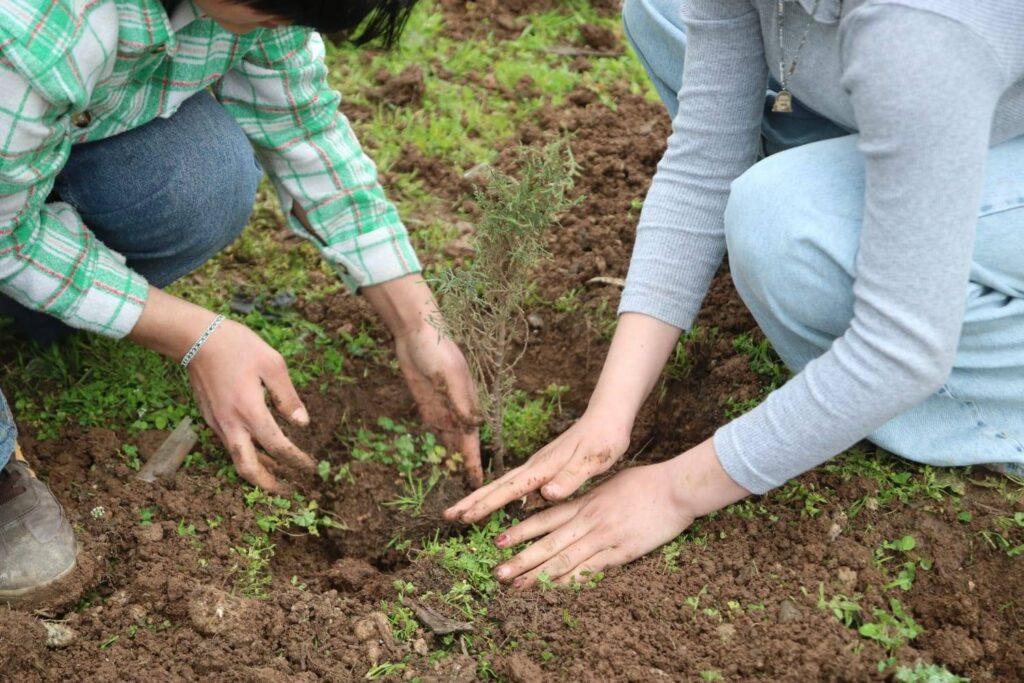
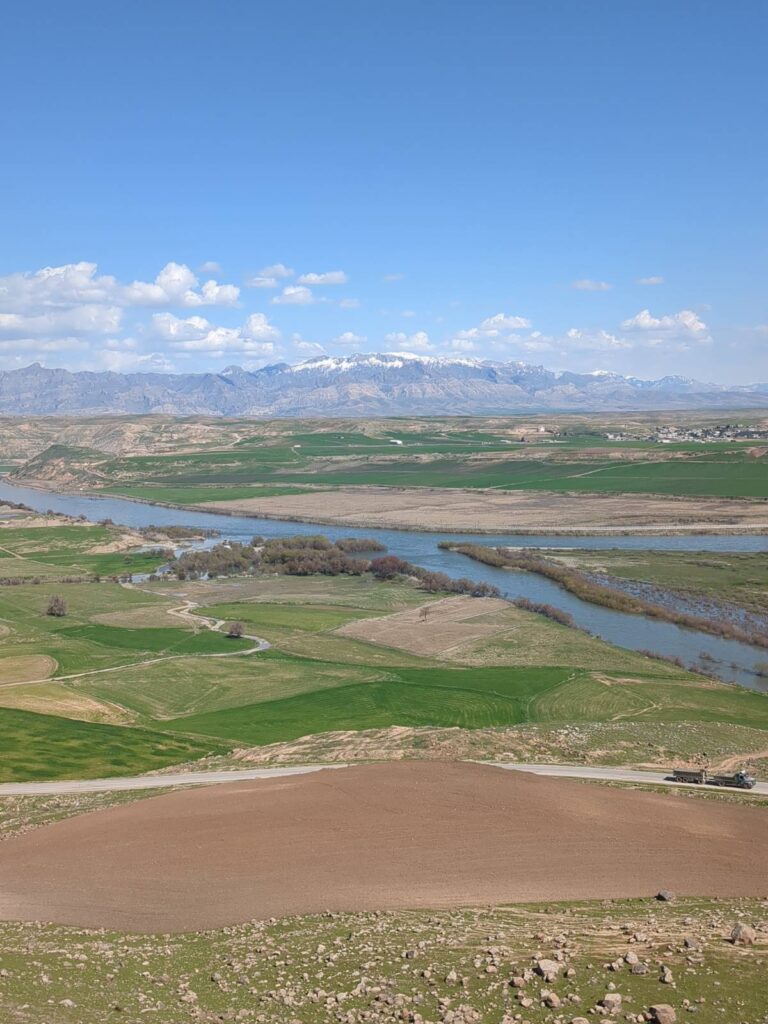
In this spirit and with this vision, today, as in the days gone by, many new trees for Rêber Apo are being planted throughout Rojava and whole Kurdistan. With every tree we plant together, these ideas take deeper root and form a collective network from which we will be nourished. Working with our hands in the fresh, rain-soaked red earth and among the many new saplings stretching their necks towards the sky in joy at the start of a new phase of life reminds us of the true origins of the lands on which we stand – in the precious land between the two main arteries of life: the Euphrates and the Tigris. It has been raining exceptionally heavily over the past few weeks. This spring has been particularly unusual, especially compared to last year, when there were a maximum of five days of rain. Over the New Year, snow fell for the first time in seven years, blanketing the entire region in white. Thus, the snow, which is usually only seen on the high peaks of the Taurus-Zagros Mountains, has now fallen on the parched and cracked ground of Rojava. At the same time, the rain brings both good fortune and misfortune, as many homes and infrastructure have been affected by severe flooding. Furthermore, it remains unclear how the harvest season will turn out, as the first few months of the year are particularly crucial for the proper sowing and ripening of crops. If the grain harvest runs into difficulties, the entire bread supply for the country’s people could be limited, which would have drastic consequences, as ‘nan’ is one of the most fundamental foods – in culinary, financial, cultural and historical terms.
Another essential and significant foodstuff is the olive ‘zeytun’, which finds its most favorable growing conditions in Afrîn. Afrîn is renowned for its rich olive cultivation, with sturdy, ancient trees. The trees themselves bear the history of past years, and their abundant fruit finds creative expression in the diet at every meal. Yet, olive cultivation is suffering from the consequences of the suffering of Afrîns society, which at the start of this year fled for the third time (or even more) to escape the brutal attacks by HTS and ISIS. The sacred, fertile land of Afrîn was wrested from the people’s hands in 2018 and, after three months of resistance, taken by the Turkish occupation forces and jihadist groups. From the outset, the attacks were directed against a cultural, organized and deeply rooted society that fills its place in history with vitality and passion. The character traits of the people of Afrîn are influenced by the varied topography, so that those from the nearby mountainous areas are harsher and more stubborn, whereas those from the villages in the wide valleys possess a gentle and benevolent character. Throughout Afrîn, a self-sufficient circular economy was established, ensuring independence. This was due to the city’s isolation, which persisted after its liberation during the Rojava Revolution in 2012, as the region remained surrounded, meaning there was no territorial connection to the autonomous administration. The people fed themselves from the land that surrounded them. Crucial to these possibilities were the women who tended the land and watered it regularly. As the bearers of communal life in the form of a natural circular economy and self-sufficiency, the role of mothers and women is at the forefront. Through the shared resistance of women, ethnic divisions were overcome, enabling them to assume a leading role for society as a whole. The Turkish army, which violently disrupted communal life in Afrîn in January 2018, named its military offensive ‘Operation Olive Branch’. To this day, we see how this line of attacks is being carried out. Just this year, jihadists have uprooted and removed ancient olive trees, thereby destroying the entire ecosystem and dispossessing an important part of Afrîn’s culture. A genocide against society through the method of advancing femicide goes hand in hand with ecocide.
Rojava is an example of this, but beyond that we also find these strategies of attack in other places – a clear strategy against the “welatparêzî”, particularly of the Kurdish people. In Mugla, Turkey, exactly three days ago, the environmental activist Esra Işık was taken into custody; she had been actively involved in the protests concerning the Akbelen Forest. The issue of the Akbelen Forest once again leads back to the olives as a common denominator: mining and coal extraction instead of olive groves. The environmental activist says: “We are not just numbers here, this is about our lives. We do not want this expropriation. This is our land.” Last June, a new general law on agriculture was enacted, though it remains highly controversial within the agricultural sector and among environmental organizations. The government emphasizes the need to secure the energy supply through coal and thereby strengthen the economic use of domestic resources. The consequence: the deforestation and destruction of the Akbelen Forest. However, this entails irreversible interference in sensitive ecosystems, as well as long-term damage to regional agriculture and biodiversity. The cultural impact is comparable to that in the Afrîn region.
At the same time, as early as the beginning of April, it has become clear what it means to follow a paradigm whose cornerstones are democratic, confederal self-administration, women’s liberation and ecology. In Wan (Turkey), collective agriculture in the form of cooperatives has been strengthened. Cooperatives can not only ensure production but also consolidate social structures and reduce dependencies. In times of economic crisis and state forces that tries to expand their power, such forms of organization will ensure self-sufficiency. In Rojava, the practice of cooperatives is part of the same aim. The examples of Jinwar and Carûdî illustrate the social component of cooperatives. They follow the decisions of the village communes, enabling them to serve a purpose in line with needs and circumstances. Furthermore, the work, planning, ideas and dreaming bring people together, unite them and remind them of the necessity of defending their own land. Every person becomes an active, creative force once more, creating new spaces, designing projects, following nature’s seasonal cycle, establishing shared supply strategies and thereby finding a deep collective consciousness.
One issue that still raises many questions at this stage is how the war, which has now shifted to Iran since the end of February, is affecting our ecosystem and the entire natural organism. War – from the arms industry right through to the use of these weapons – always has an immense impact on air quality and thus brings further consequences, like a chain reaction. On 28 February 2026, the US and Israel launched joint attacks on Iran, whereupon Iran carried out retaliatory strikes against the US and Israel, as well as US allies among the Gulf states. In addition to military bases, key infrastructure facilities in the Middle East, such as oil refineries and airports, were bombed. With the attack on South Pars, the war against Iran has reached a point that goes far beyond the immediate destruction of energy infrastructure. The gas field, which Iran shares with Qatar, is considered the largest in the world. It is not only the cornerstone of Iran’s regional energy supply. An attack on such facilities always raises the question of the resulting environmental damage. These include fires, clouds of pollutants, potential leaks, contamination of soil and water, as well as long-term damage to people and the environment. And it is precisely this aspect that is likely to come to the fore more strongly in the coming weeks than the initial market reaction on the stock exchanges. For the consequences could be considerable. Acid rain is caused by the large amounts of smoke that rise into the sky following explosions.
Just as happened last Sunday, when the sky over Tehran turned black following Israeli attacks on four Iranian oil depots. However, even far from the war zone, acid rain is a common phenomenon in many industrialized regions. It is caused by the interaction between water vapor and certain gases in the atmosphere produced by the combustion of coal and oil. Plants can also be damaged. Acid rain leaches minerals and nutrients from the soil that are necessary for the growth of trees. For humans, acid rain does not normally pose an immediate danger upon direct contact with precipitation. However, it can also reach regions far from its source via the water cycle.
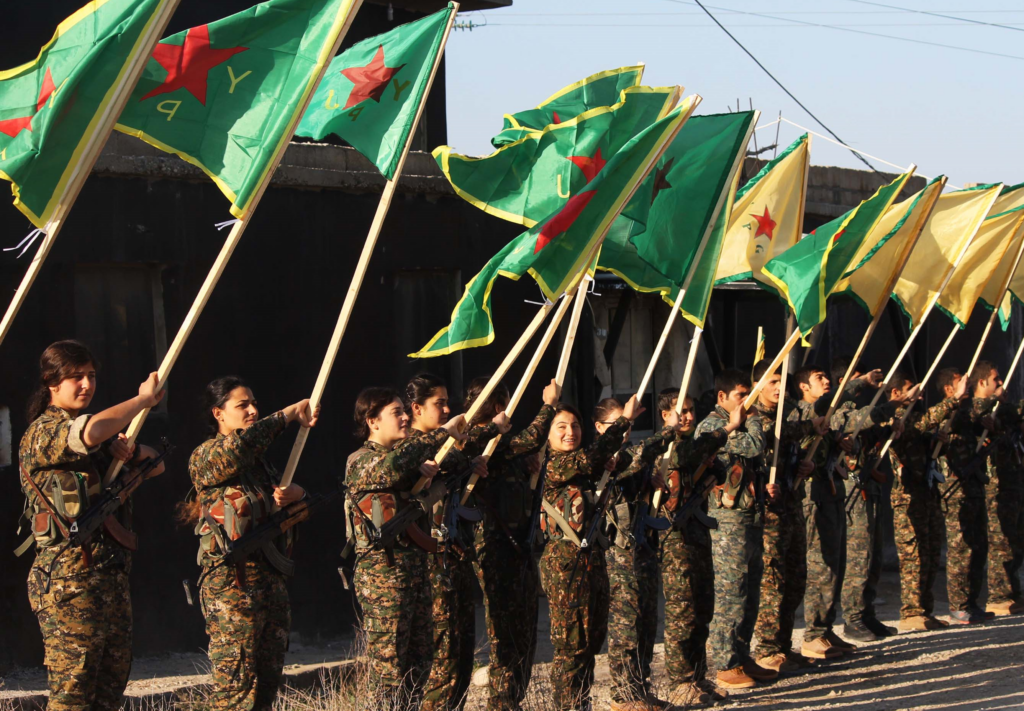
A powerful force against this war is the Women’s Defense Units (YPJ), which form since 13 years a military unit whilst simultaneously building on ideological deepening. The overarching guiding principle of this unit is women’s liberation, which thus leads to the liberation of society based on ecological principles. Today was the anniversary of the founding of YPJ which by this find its place in the line of the importance of this day for the movement. Yet, in this era of political and organizational integration, this force is currently under threat. For the Kurdish people, the freedom movement, the whole of Syria, and indeed for many women worldwide, the YPJ stands as an enormously important and outstanding example of taking genuine steps towards women’s emancipation and autonomy. The existence of the YPJ defines the red line in negotiations at every level. Thus, the destruction of the YPJ simultaneously means the legitimization of a repugnant war against humanity; it means the deliberate enslavement and exploitation of women; it means the destruction of the environment and the acceptance of its catastrophic consequences; it means nipping the shoots that Rêber Apo has planted in the bud and robbing them of all sunlight and water. The non-acceptance of the YPJ leads to a rejection of a self-determined life based on collective and ethical values.
In this, we see that the 4th April cannot be separated from all these issues, but rather represents a central point of connection. The birth of Abdullah Öcalan sent out a great wave, until it became the birthday of the free woman, thereby turning a utopia into lived practice. We therefore wish to commemorate all those who have also embarked on this path and contributed to the realization of this utopia. At the same time, we celebrate with all those who hold their dreams high and define every day as a new opportunity for change towards a life of ecological, social and political balance.